

Exposing what’s really behind those YouTube product recommendations.
Looking for a password manager, antivirus software, or a VPN? Many will look on YouTube. They will see polished productions with confident opinions and claims of “honest reviews”. The YouTuber will usually have negotiated special prices (a fabricated discount) for you. And, if you find the review useful, you can help out the channel “a little” by using the associated link.
But, beneath all this lies a business model that is just an effective sales pitch – the affiliate ecosystem.
The Hidden Business Model
Affiliate marketing is simple. A company provides a YouTuber with a unique referral link. The creator earns a commission every time someone purchases through that link.
Unlike traditional advertising, affiliate marketing rewards conversions rather than views. Creators don’t simply earn money because people watched a video—they earn money because viewers bought something.
The problem is that the commission can become the primary motivation for creating content.
Affiliate YouTubers present themselves as reviewers rather than salespeople. However, many viewers don’t approach their recommendations with the same skepticism they would show toward a salesman.
This Creates a Massive Conflict of Interest!
Here are some example links.
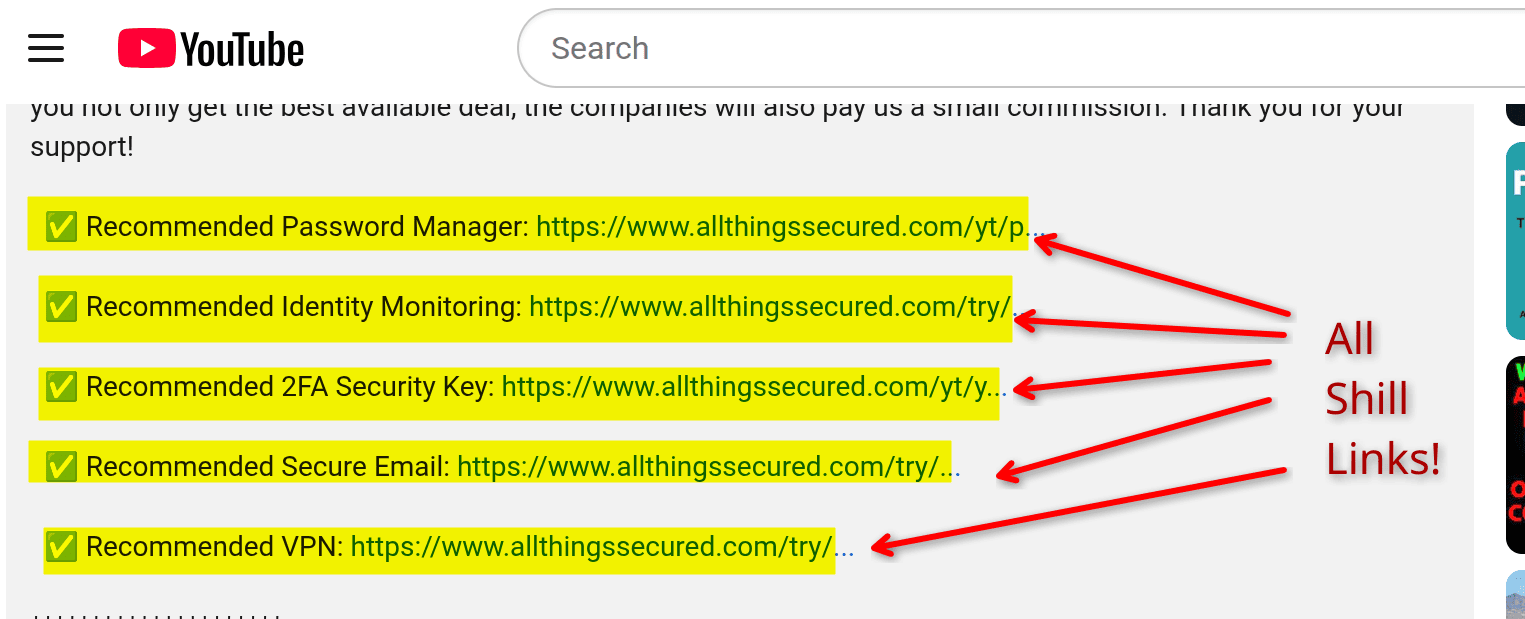


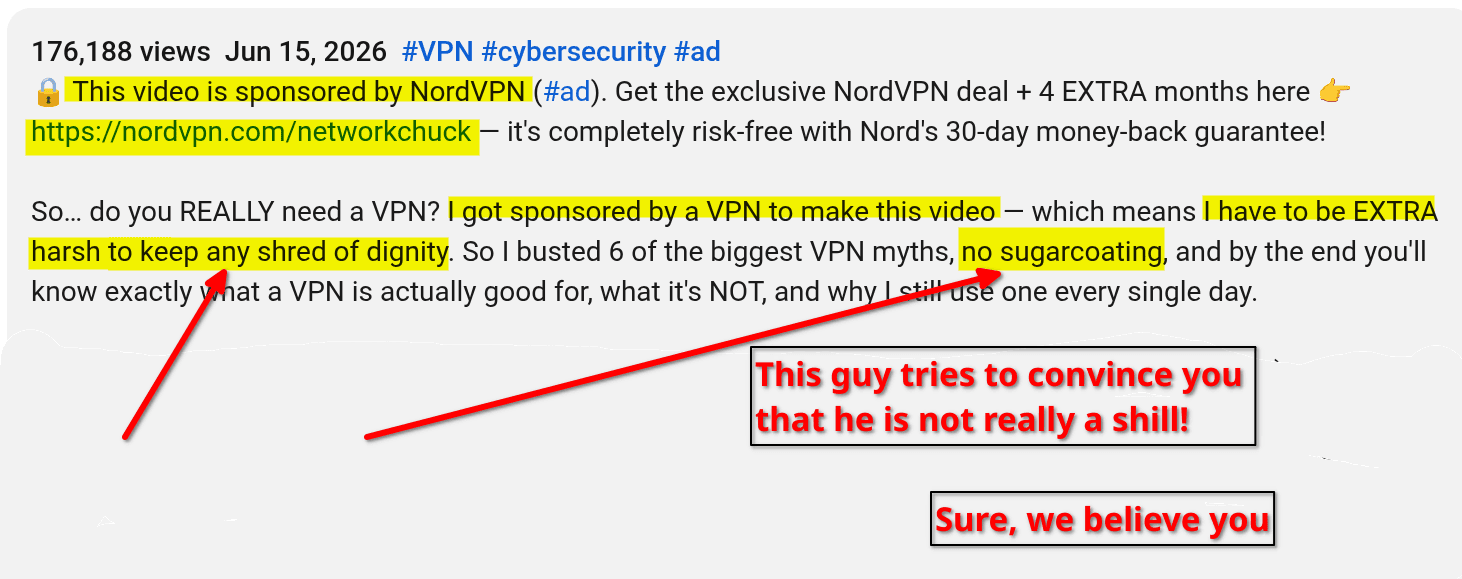
The Illusion Of Independence
Although affiliate programs exist across many software industries and services, the VPN market is the best example. VPN affiliates create the illusion of independence. I will focus primarily on VPN affiliate programs for the rest of this article.
Typical tricks used by VPN affiliates include the “Best X” or the fake comparison matrix. Consumers searching for “Best VPN” are met with polished comparison tables that appear to rank providers by speed, encryption, or privacy.
In reality, however, these rankings are highly fluid and are based on who pays the highest commission. A lower-tier VPN can instantly jump to the top spot on a site simply by raising its affiliate payout rate; the recommendation has nothing to do with actual performance.
Help Out The Channel “Just A Little”
But John, these are just small amounts, right? Ummm, NO!
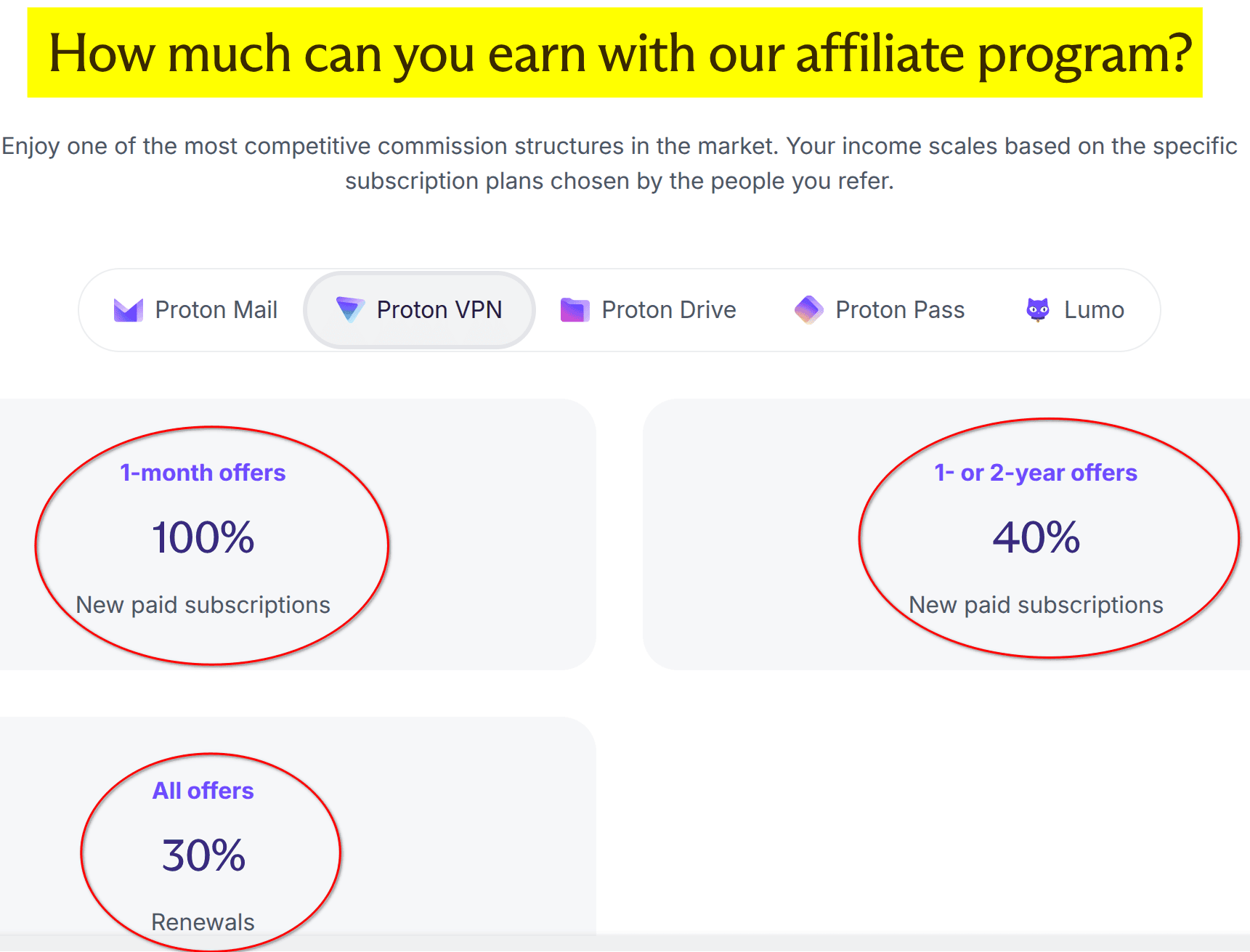
Affiliate programs are high-paying programs where YouTubers not only earn high commissions, but also recurring subscription revenue. Plans differ, but the typical program pays 40-100% of the first year subscription fee and 30-35% of recurring subscription fees. Because Proton offers services other than VPN, they will offer an additional 20% cross-selling bonus for those who purchase the Proton ecosystem.
Suppose a VPN subscription costs $120 per year. A 40% commission earns $48 per sale. Refer 100 customers, and that is about $4,800. If the program pays recurring commissions and 80 customers renew the next year, they may continue earning on those renewals.
Small YouTube channels may earn between $50 and $500 per month, while large comparison websites with strong search traffic could earn $100,000+ per month.
Do All VPN Companies Engage In Affiliate Programs?
Just about all commercial VPN companies have some kind of affiliate program. I was only able to find three that do not. These are:
- IVPN
- Mullvad
- Windscribe
All three avoid performance-based affiliate marketing, and instead rely on traditional marketing, word of mouth, privacy and security conferences, etc. Note: Windscribe does have a customer referral program.
These three providers are often recommended by privacy enthusiasts, as their business models do not depend on the affiliate ecosystem that dominates much of the VPN industry.
The Bottom Line
Sometimes, when I watch these reviews, I ask myself – “How could they draw that conclusion?”
The problem with affiliate marketing is that financial incentives take precedence over independent evaluation. I am sure that some YouTube creators produce honest, carefully researched content, despite earning affiliate commissions. However, others blur the distinction between reviews and advertisements so effectively that viewers may never realize they’re being shilled to. In a system where financial incentives are so high, it is difficult for me to trust many of these YouTubers.
The next time a YouTuber declares that a product is “the best”, you may want to ask yourself: “Is it the best for me or for the affiliate YouTuber”?
—

I was not aware of the amount of money involved in affiliate links. Definitely will not give as much consideration to YouTube “opinions” now. Will look to industry magazines or Consumer Reports instead for less biased reviews.
Hi J R,
Yes, you have to ask yourself if the Youtuber that is paying for his house, vacation home, new cars and exotic vacations with shill money from say Proton, is really giving you his true, honest reason for why he chose ProtonVPN as his VPN.
Also, you may not have noticed that any review from a DavesComputerTips author does NOT have a shill URL.
Finally, remember that some industry magazine’s parent company may own that product that is being reviewed. For example, Ziff Davis owns IPVanish and publishes PCMag, ExtremeTech, IGN, Mashable, CNET and ZDNet.