Geek Fact for March 14th
In 1995, for the first time, thirteen people were in space. It was a joint US – Russia effort consisting of eight American and five Russian astronauts. Learn more at http://en.wikipedia.org/wiki/List_of_spaceflight_records
Learn an interesting fact to share with friends and increase your Geek Cred!
In 1995, for the first time, thirteen people were in space. It was a joint US – Russia effort consisting of eight American and five Russian astronauts. Learn more at http://en.wikipedia.org/wiki/List_of_spaceflight_records
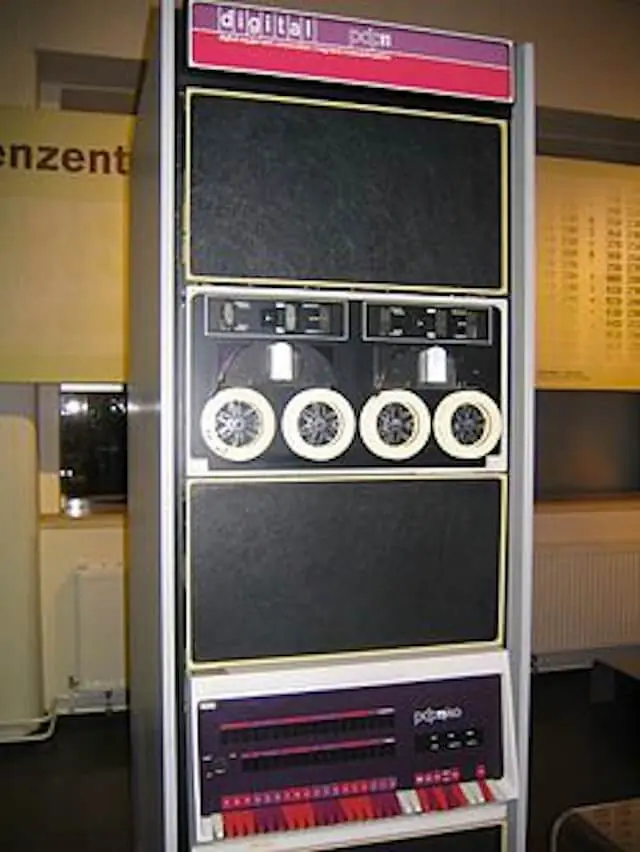
In 1970, Digital Equipment Corporation introduced the PDP-11 minicomputer. The PDP-11 was a series of 16-bit minicomputers sold by Digital Equipment Corporation (DEC) from 1970 into the 1990s and was one of a succession of products in the PDP series. Learn more at http://en.wikipedia.org/wiki/PDP-11
In 1834, mathematician Karl W. Feuerbach died at age 33. In 1822, Feuerbach wrote a book on mathematics noted mainly for a theorem on the nine-point circle, which is now known as Feuerbach’s theorem. Learn more at http://en.wikipedia.org/wiki/Karl_Wilhelm_Feuerbach
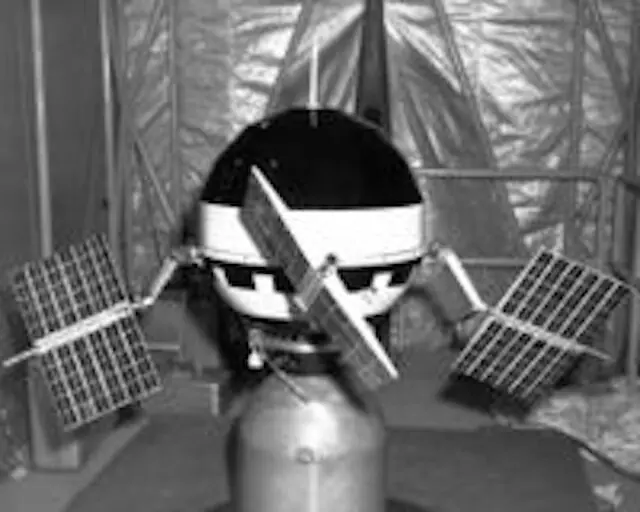
In 1960, Pioneer 5 was launched into solar orbit between Earth and Venus. The spacecraft established a communications link with the Earth from a record distance of 22.5 million miles on June 26th, 1960, which was its last day of transmission. Learn more at http://nssdc.gsfc.nasa.gov/nmc/spacecraftDisplay.do?id=1960-001A
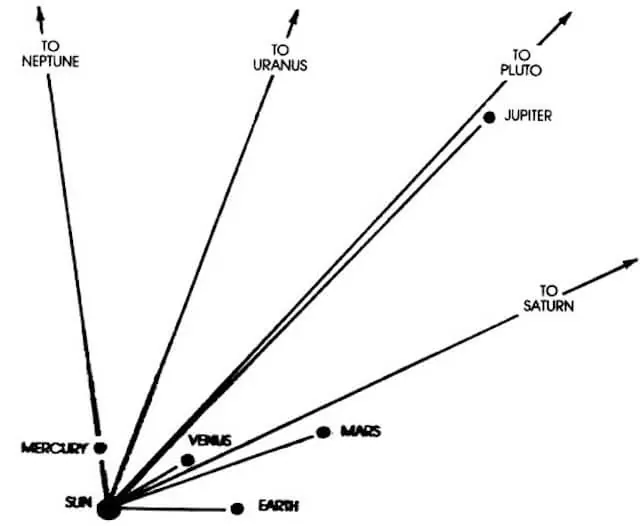
in 1982, syzygy occurred when all nine planets (including Pluto) aligned on same side of Sun. Additionally, Mercury, Venus, Earth, Mars, Jupiter, Saturn and Pluto were within a 95 degree wide interval, the closest they had been in more than 800 years. Read more: http://www.reyjr.com/2009/04/what-is-syzygy.html#ixzz1oca2Vwjt
In 1961, a dog named Chernushka (Blackie) became the first dog returned from space, aboard Sputnik 9. Chernushka’s companions included a dummy cosmonaut, mice and a guinea pig. The flight was a success and Chernushka was recovered successfully. Learn more at http://space.about.com/od/sputnik/a/DogsInSpace.htm
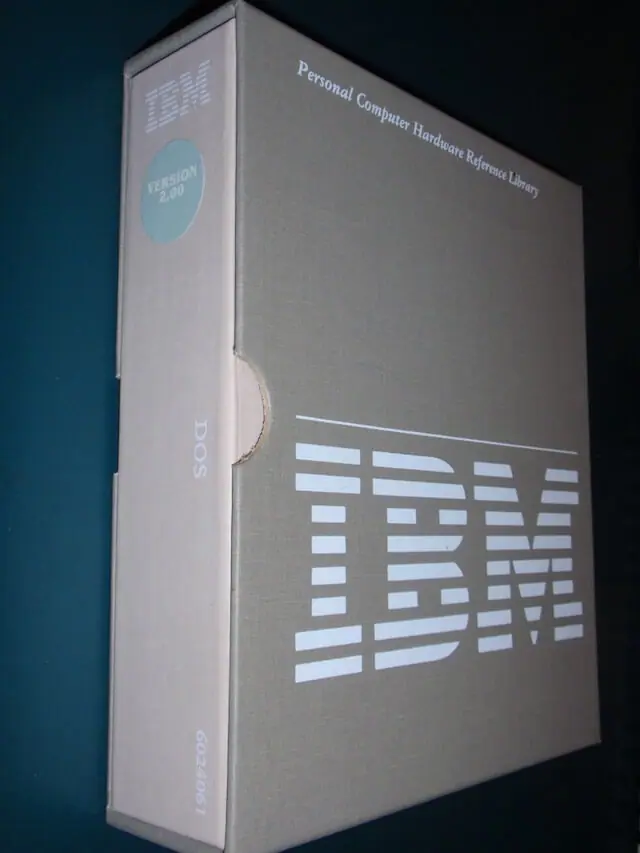
In 1983, IBM released PC DOS version 2.0. Completely rewritten from the ground up, DOS 2.0 added subdirectories and hard disk support for the new IBM XT. Learn more at http://en.wikipedia.org/wiki/IBM_PC_DOS#PC_DOS_2.x
In 1985, IBM-PC DOS Version 3.1 update released. PC DOS 3.1 was the first OS to provide a network support. Learn more at http://en.wikipedia.org/wiki/IBM_PC_DOS In 1876, Alexander Graham Bell patented the telephone. The patent for the telephone became recognized as the most valuable patent in
In 1886, the first US alternating current power plant was started in Great Barrington, Massachusetts. Developed first in France, Italy and Germany, alternating current proved to be the best method for harnessing electric power. Learn more at http://edisontechcenter.org/HistElectPowTrans.html
In 1827, Italian physicist Alessandro Volta died at age 82. Alessandro Volta’s voltaic pile was the first battery that produced a reliable, steady current of electricity. Learn more at http://inventors.about.com/od/utstartinventors/a/Alessandro_Volta.htm
In 1977, the first CRAY 1 supercomputer was shipped. In the late 1970s, the Cray 1 became synonymous with high-speed computing./blockquote> Learn more at http://www.answers.com/topic/cray-inc In 1774, William Herschel first sighted Orion nebula. The Nebula is actually part of a larger nebula structure known as
In 1838, astronomer George W. Hill was born. His calculation of the effects of the planets on the moon’s motion was a particular case of the famous three-body problem, which dates back to Isaac Newton. Learn more at http://www.encyclopedia.com/topic/George_William.aspx
In 1983, Compact Disc recording developed by Philips and Sony introduced to the US and European markets. The CD ushered in a shift from analog to digital in the music industry and spawned new digital technologies, including CD-Rom and DVD. Learn more at http://www.newscenter.philips.com/main/standard/about/news/press/20070816_25th_anniversary_cd.wpd
In 1924, Deke (Donald) Slayton, NASA astronaut and Chief of Flight Operations at Johnson Space Center, was born. Mr. Slayton was named one of the Mercury astronauts in 1959 and was originally scheduled to pilot the Mercury-Atlas 7 mission but was relieved of this assignment